

Designing embedded systems today requires balancing processing bandwidth, power dissipation, and production economics. Engineers must navigate expanding functional demands across industrial automation, robotics, and connected devices without inflating production budgets.
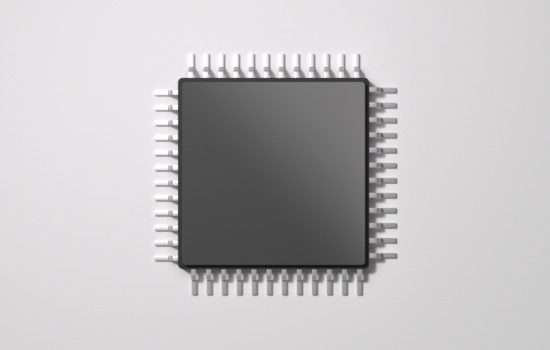
When seeking predictable execution alongside rigorous energy efficiency, hardware development teams frequently turn to the STMicroelectronics 32-bit microcontroller (MCU) family to bridge the gap between computational capability and thermal limits. These chips handle sophisticated edge computation reliably.
Among these widely deployed solutions, the STM32F103C8T6 remains an enduring industry benchmark for embedded control. Its robust internal bus structure, balanced peripheral suite, and consistent operational resilience make it an attractive anchor for versatile industrial architectures.
However, silicon capabilities only represent half of the hardware development equation. As global supply dynamics fluctuate and project lifecycles extend, finding a dependable MCU supplier becomes just as critical as validating the circuit layout during development.
Edge Computing Demands and Modern Embedded Realities
Decentralized embedded nodes are increasingly tasked with running real-time filtering, mathematical transformations, and encrypted networking protocols directly at the hardware periphery. Offloading these time-critical calculations from central servers reduces communication latency while boosting system responsiveness.
Some legacy 8-bit and 16-bit MCUs may have limited processing capacity for computationally intensive workloads, depending on their architecture, clock speed, and peripheral resources. High processor utilization can limit available processing headroom and may increase power consumption, depending on the MCU architecture and workload.
Migrating to advanced 32-bit silicon architectures resolves these bottlenecks by combining deterministic real-time responsiveness with energy-conscious operation. Embedded platforms can complete mathematical calculations swiftly, entering low-power states promptly between execution routines to curb thermal buildup.
Architectural Strengths of the STMicroelectronics 32-Bit Microcontroller (MCU)
At the core of the STM32F103C8T6 is an ARM Cortex-M3 processor operating up to 72 megahertz. This high-efficiency RISC engine features a hardware nested vectored interrupt controller that delivers predictable, low-latency interrupt servicing for critical physical events.
Integrated memory mapping directly enhances execution speeds during demanding control loops. With 64 kilobytes of embedded flash memory and 20 kilobytes of static random-access memory, the device facilitates rapid code fetching without imposing performance-degrading wait states on core routines.
Housed in a compact 48-pin low-profile quad flat package, the device operates within a voltage range of 2.0 to 3.6 volts. Its specified industrial temperature envelope from -40 to +85 degrees Celsius ensures dependable performance under harsh environmental stresses.
Peripheral Integration and Mixed-Signal Flexibility
The device’s true strength lies in its extensive suite of integrated input and output interfaces. It incorporates up to 37 multi-functional input-output pins, with most pins featuring 5-volt tolerance to simplify direct connection with external digital logic and legacy sensor networks.
Analog sensing is supported by two 12-bit ADCs, with conversion times as short as 1 μs under specified operating conditions. Supporting up to 10 external channels, these converters execute parallel voltage monitoring and continuous current tracking without overtaxing internal registers.
Extensive communication support further reduces discrete interface overhead across the printed circuit board. Dedicated hardware channels include three USART ports, two SPI buses, two I2C lines, USB 2.0 full-speed functionality, and an integrated Controller Area Network bus interface.
A dedicated advanced-control 16-bit timer with dead-time generation supports complementary pulse-width modulation output. This specialized hardware timing engine enables direct control of variable-speed brushless motors and switched-mode power supplies without generating significant processor overhead.
Mitigating Assembly Risks with a Qualified MCU Supplier
High-volume hardware manufacturing requires continuous coordination with verified distributors. Unibetter distributes a wide range of electronic components, giving equipment manufacturers consistent access to essential semiconductor stock while navigating unpredictable allocation cycles.
Guarding production assemblies against counterfeit components remains an essential priority for mission-critical hardware builds. To eliminate counterfeit hazards across complex bills of materials, Unibetter sources and procures electronic components from franchised sources to guarantee 100% authentic, quality-assured and brand-new electronic components.
Maintaining lot traceability and following manufacturer handling and storage requirements can help reduce sourcing risks and support more effective quality investigations. Direct procurement protocols ensure that sensitive processing silicon, passive components, and power management units adhere strictly to factory specifications.
Board-Level Optimization and Electrical Integrity
Achieving reliable mixed-signal performance requires careful printed circuit board trace routing and decoupling strategies. Placing 0.1-microfarad ceramic capacitors directly adjacent to every power pin suppresses transient rail ripple, protecting analog-to-digital conversions from high-frequency switching disturbances.
Layout teams must also isolate the high-speed external crystal oscillator traces from noisy switching lines and parallel communication traces. Keeping high-frequency clock loops compact reduces parasitic inductance and eliminates unwanted radiated electromagnetic emissions across the circuit board.
Configurable low-power states, including sleep, stop, and standby modes, allow embedded designers to minimize battery consumption. These dynamic power profiles make the processor ideal for remote telemetry nodes that wake periodically to transmit environmental data.
Industrial Deployments and Firmware Frameworks
Factory automation systems capitalize on the deterministic throughput delivered by this processing architecture. Integrating the STMicroelectronics 32-bit microcontroller (MCU) into automation platforms enables teams to leverage extensive peripheral libraries and standard development toolchains, accelerating time-to-market.
Commercial building controllers, digital motor drives, and medical monitoring devices benefit similarly from consolidating processing power, digital communication, and analog sensing onto a unified silicon package. This level of peripheral integration cuts assembly complexity and board dimensions.
Sourcing Strategy and Supply Chain Optimization
Maintaining multi-year hardware availability hinges on diversified sourcing pathways and transparent market insight. UniBetter excels by supporting customers to locate needed electronic components and acquire them at lower costs, helping engineering enterprises navigate allocation crunches and prevent costly assembly downtime.
Partnering with an experienced MCU supplier safeguards engineering timelines during component shortages and production ramp-ups. Reliable market intelligence assists purchasing teams in forecasting lead-time adjustments, avoiding obsolete parts, and locking in favorable pricing early.
Through systematic inventory planning and franchised procurement, manufacturers avoid reliance on unauthorized brokers and unpredictable secondary channels. Disciplined sourcing maintains uninterrupted production flow while preserving healthy operating margins across high-volume assembly lines.
Engineering Resilient Architectures for the Future
Building dependable embedded electronics demands an integrated approach that harmonizes circuit design with strategic semiconductor distribution. The STM32F103C8T6 exemplifies this balance, offering resilient performance, abundant peripheral resources, and scalable 32-bit computing for challenging industrial applications.
When hardware teams combine robust circuit layout with disciplined procurement, they protect their products against electrical interference and market instability. Aligning suitable silicon with well-managed sourcing channels helps manufacturers support product reliability and component availability over multi-year deployment cycles.
