

Public transport is entering a period of technological change that extends far beyond replacing diesel engines with electric powertrains. Operators are beginning to consider how vehicles communicate with infrastructure, how fleet data informs daily decisions, and where automated driving could improve safety and service consistency.
These developments are reshaping expectations of bus and coach manufacturers, which increasingly need to address software, energy systems, and vehicle engineering as connected parts of one transport ecosystem. Yutong Bus is part of this changing industry, where the future of public mobility will depend on how effectively new technologies work together in everyday operations.
Autonomous Driving and the Changing Role of the Driver
Automated driving technology combines sensors, cameras, radar, positioning systems, and onboard computing to interpret a vehicle’s surroundings. These components help detect road users, identify obstacles, estimate distances, and support decisions such as maintaining speed or adjusting direction. The level of automation varies considerably, from driver assistance features to systems capable of handling specific driving tasks under defined conditions.
Urban environments present particular challenges. Pedestrians may cross unexpectedly, cyclists can enter blind spots, and road layouts often change because of construction or temporary traffic controls. Autonomous systems must interpret these situations reliably, while also accounting for poor weather, unusual road markings, and unpredictable human behavior. Testing in controlled environments is useful, but practical deployment also requires extensive validation across varied operating conditions.
The driver’s role is also likely to evolve rather than disappear immediately. Depending on the automation level and applicable regulations, drivers may remain responsible for supervision, passenger assistance, emergency response, and decisions outside the system’s operating limits. Clear human-machine interfaces are important because drivers need to understand system status, receive timely warnings, and know when manual intervention is required.
Connected Fleets and Data-Based Operations
Connected vehicle technology allows buses to exchange information with fleet management platforms, depots, and sometimes roadside infrastructure. Data such as vehicle location, energy consumption, fault codes, and operating conditions can provide dispatchers with a more detailed view of fleet performance. This information helps identify service irregularities and supports decisions about vehicle allocation.
Predictive maintenance is one practical application. Rather than relying exclusively on fixed inspection intervals, fleet teams can examine diagnostic data for signs of developing faults. Unusual temperature readings, repeated warning signals, or changes in component behavior may indicate that an inspection is needed. Such systems do not replace professional maintenance, but they can help technicians prioritize attention and reduce unexpected service interruptions.
Connectivity also introduces responsibilities around data security. Fleet platforms may process vehicle locations, operational records, and information linked to drivers or passengers. Operators need clear access controls, secure communications, software update procedures, and policies governing data retention. As digital systems become more central to transport services, cybersecurity becomes part of vehicle and fleet management rather than a separate IT concern.
Green Mobility Through Integrated Vehicle Engineering
Electric propulsion is a major part of the transition toward lower-emission public transport. Battery-electric buses produce no tailpipe emissions during operation, while their overall environmental impact depends on electricity generation, battery production, vehicle lifetime, and end-of-life management. Fleet planners should assess these factors alongside local air-quality objectives and energy costs.
The transition also requires coordination between vehicles and charging infrastructure. Depot charging can suit predictable overnight schedules, whereas opportunity charging may support routes with limited layover time. Battery capacity, charging power, grid availability, and daily mileage all influence the most practical arrangement. Energy management software can further help operators track consumption and identify differences between routes or driving patterns.
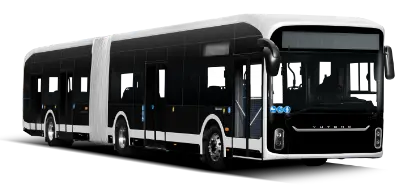
Vehicle architecture contributes to efficiency as well. Weight, aerodynamics, regenerative braking, thermal management, and component integration influence how effectively stored energy is used. The U18 illustrates some of the physical considerations involved in developing a high-capacity electric bus. Its available body lengths are 18,170 mm and 18,720 mm, with a minimum turning diameter of 21.5 metres. Such dimensions make route geometry and turning-space assessments important parts of deployment planning.
Building an Integrated Transport Ecosystem
The next stage of public transport development will depend on cooperation between vehicle engineering, software providers, energy companies, infrastructure operators, and public authorities. A connected bus cannot deliver its full operational value if communication networks are unreliable or fleet systems cannot exchange information. Likewise, electric vehicles require charging facilities and power supplies that match the demands of their routes.
For bus and coach manufacturers, this shift creates a broader development task. Vehicle design increasingly involves integrating electrical architecture, battery management, onboard computing, communication systems, and diagnostic functions. Compatibility between these elements matters because isolated technologies can create maintenance complexity or limit future upgrades.
Yutong Bus describes its approach through integrated new energy vehicle solutions, combining vehicle development with transportation and service packages for different market segments. Such an approach reflects the industry’s movement toward solutions that consider the vehicle alongside its operating environment. However, the practical value of any integrated package still depends on local infrastructure, technical support, regulatory requirements, and the operator’s actual service needs.
Conclusion
The future of public transport will not be shaped by a single breakthrough. Automated driving may change how vehicles respond to traffic, connected fleets can make operations more data-informed, and electric propulsion can support cleaner urban mobility. Progress will depend on whether these technologies prove reliable, secure, affordable, and adaptable to real routes.
As bus and coach manufacturers develop increasingly integrated vehicle platforms, Yutong Bus represents one example of an industry participant working across new energy products and transportation solutions. The lasting measure of innovation will be its ability to improve daily services while meeting the practical demands of passengers, operators, and cities.
